PICSI, Zymot, IMSI or ICSI? Sperm Selection Explained
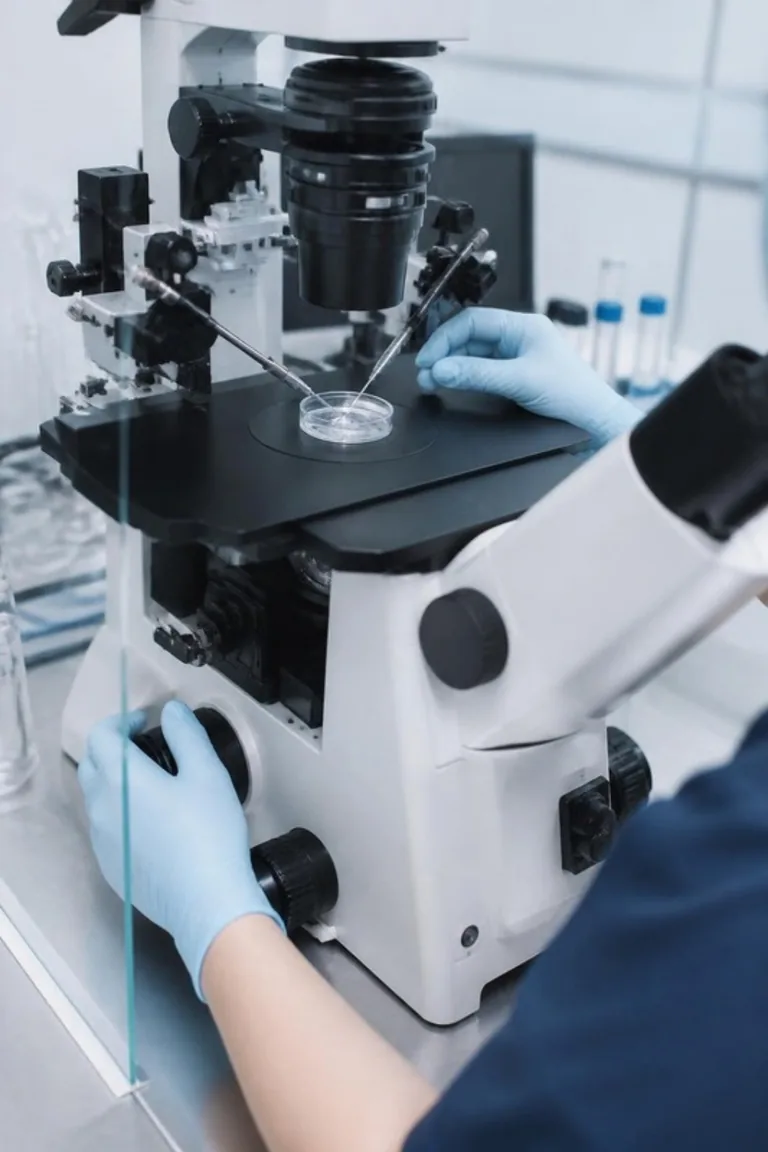
If you are planning IVF with a male factor, or after fertilisation problems in a previous cycle, you will soon meet a list of sperm selection methods: ICSI, IMSI, PICSI, Zymot, MACS. Some are well established, others are sold as extras with a price tag and limited evidence. This guide explains in plain English what each method does, what the research and UK guidance say, and the questions to ask before you pay for any of them.
Short answer: ICSI, where one sperm is injected into each egg, is a proven treatment when there is a sperm problem or fertilisation failed in a previous cycle. The extra selection methods built on top of it have weaker evidence: the UK's NICE guideline (2026) says not to use IMSI or PICSI in place of standard ICSI, and the evidence for microfluidic sorting such as Zymot is still uncertain. MACS and sperm DNA fragmentation testing are not recommended for routine use. Ask any clinic why a method is suggested for you and what it adds to the cost.
Standard IVF or ICSI?
In standard IVF, eggs and sperm are placed together in the laboratory and fertilisation happens on its own. In ICSI (intracytoplasmic sperm injection), an embryologist selects a single sperm and injects it directly into each egg. Read more on our ICSI treatment page.
ICSI is recommended when:
- the sperm count is very low, or sperm movement or shape is poor;
- a previous IVF cycle resulted in no or very few fertilised eggs;
- sperm has been collected surgically or frozen sperm of limited quality is used.
When the sperm is normal, ICSI does not improve the chance of a baby. NICE advises not to use ICSI for fertility problems that are not related to sperm if the semen analysis is normal.
The extra methods at a glance
| Method | What it does | What the evidence says | UK guidance |
|---|---|---|---|
| IMSI | Sperm is chosen under very high magnification (over 6,000×) | Very low-quality evidence; no proven increase in births | HFEA: grey. NICE: do not use |
| PICSI | Sperm that bind to hyaluronan (a natural substance around the egg) are chosen | Large UK trial: no increase in births; possibly fewer miscarriages | HFEA: black for births. NICE: do not use instead of ICSI |
| Zymot (microfluidic sorting) | Sperm swim through a fine membrane in a chip, without spinning in a centrifuge | Small, mixed trials; effect on births uncertain | HFEA: not rated. ESHRE: can be considered |
| MACS | Removes sperm showing signs of damage or cell death | Inconsistent results | ESHRE: not for routine use |
| Sperm DNA fragmentation test | Measures the share of sperm with broken DNA | No agreed normal range | NICE: do not test |
IMSI: high-magnification selection
IMSI uses a microscope with very high magnification so the embryologist can look more closely at the shape of each sperm before injecting it. A Cochrane review of 13 trials with almost 2,800 couples found it very uncertain whether IMSI improves the chance of a live birth, and all the evidence was of very low quality. The HFEA rates IMSI grey, meaning there is not enough good evidence to rate it, and NICE advises not to use it as an addition to ICSI.
PICSI: hyaluronan binding
PICSI selects sperm that bind to hyaluronan, on the idea that these sperm are more mature. The largest trial, HABSelect, involved 2,772 couples at 16 UK clinics. Term live births were 27.4% with PICSI and 25.2% with standard ICSI, a difference that was not significant. Miscarriages were lower with PICSI (4.3% against 7.0%), but this was a secondary finding. A Cochrane review updated in 2026 concluded that PICSI may make no difference to, or slightly increase, the live birth rate, and probably slightly reduces miscarriage.
The HFEA rates PICSI black for having a baby, meaning no effect, and grey for reducing miscarriage in women over 35. NICE advises not to use PICSI in preference to standard ICSI.
Zymot: microfluidic sperm sorting
Zymot (sold as ZyMōt) is a single-use chip in which sperm swim upwards through a microporous membrane. The aim is to collect the most mobile sperm without spinning the sample in a centrifuge, which may damage DNA. Trials so far are small and mixed: some found better fertilisation or less DNA damage, but most found no difference in pregnancy or live birth. A Cochrane review in 2026 said the effect on live birth is uncertain. ESHRE says microfluidic sorting "can be considered", and the HFEA has not rated it. Larger trials are under way, so the picture may change.
Zymot or PICSI: which is better?
There is no good evidence that either method increases the chance of a baby compared with standard ICSI, and they have not been directly compared in a large trial. PICSI has the larger evidence base, which points to no gain in births and possibly a lower miscarriage rate. Zymot has smaller studies with uncertain results. Neither should be a default extra. A specialist may suggest one in particular situations, for example after repeated failed fertilisation, and should explain why.
MACS and sperm DNA fragmentation testing
A sperm DNA fragmentation test measures how many sperm have damaged DNA. There is no agreed threshold for what counts as high, and NICE advises not to carry out this test. MACS (magnetic-activated cell sorting) aims to remove damaged sperm before ICSI; ESHRE does not recommend it for routine use. The HFEA rates treatments offered after a high fragmentation result as grey, and using surgically retrieved sperm for this reason as red.
What matters more than the method
The basics come first: an up-to-date semen analysis, read against the World Health Organization's reference values, and attention to lifestyle factors such as smoking and weight, which NICE links to lower semen quality.
| Semen measure | WHO 2021 lower reference value |
|---|---|
| Volume | 1.4 ml |
| Concentration | 16 million per ml |
| Total sperm number | 39 million per ejaculate |
| Total motility | 42% |
| Progressive motility | 30% |
| Normal forms | 4% |
A result below one of these values does not on its own mean a man is infertile, and one sample can be affected by illness or stress, so a borderline result is often repeated. Read more in our guides to male fertility testing and improving male fertility before IVF.
Questions to ask your clinic
- Do we need ICSI, or would standard IVF work for us?
- Why are you suggesting this extra method for us specifically?
- What evidence supports it, and how does it change our chance of a baby?
- How much does it add to the cost?
- What would you do if we chose not to use it?
The HFEA ratings and NICE guidance apply to UK clinics. Clinics in North Cyprus are not regulated by the HFEA, so it is worth asking these questions everywhere. After an unsuccessful cycle, our guide to what to review before trying again covers the wider picture.
How the HFEA rates add-ons
The UK fertility regulator rates each add-on for a specific outcome, usually the chance of having a baby:
- Green: good evidence that it improves the outcome.
- Amber: conflicting evidence; it is not clear whether it works.
- Grey: not enough good-quality evidence to rate it.
- Black: evidence that it has no effect on the outcome.
- Red: potential safety concerns, or it may reduce the chance of success.
Frequently asked questions
Is PICSI worth paying for?
For most couples, the evidence does not show more births with PICSI than with standard ICSI, and NICE advises against using it in place of ICSI. It may reduce miscarriage slightly, so discuss it with a specialist if miscarriage has been a problem.
Is Zymot better than PICSI?
Neither has been shown to increase births compared with standard ICSI, and they have not been compared head to head in a large trial.
Do we need ICSI if the sperm is normal?
Usually not. NICE advises against ICSI for non-sperm-related problems when the semen analysis is normal. It may still be used if fertilisation failed in a previous cycle.
Should my partner have a sperm DNA fragmentation test?
NICE advises not to carry out this test, because there is no agreed normal range and no proven treatment based on the result.
How can we get a personal recommendation?
Send the semen analysis and any previous treatment records through our medical assessment form. A specialist at one of our partner clinics in North Cyprus will review them free of charge. If you need recent tests first, see which tests to do in the UK.
Sources
- HFEA — Intracytoplasmic sperm injection (ICSI)
- NICE NG257 — Intracytoplasmic sperm injection (2026)
- HFEA — Treatment add-ons and ratings
- Miller et al. — HABSelect trial of PICSI, The Lancet (2019)
- Cochrane review — IMSI (2020)
- ESHRE — Good practice recommendations on add-ons (2023)
- NICE NG257 — Investigation of fertility problems, including WHO 2021 semen values
Last updated: 23 October 2026
Have questions about your own fertility journey?
Talk to our Cyprus-based Dream Team. We’ll explore your options together and arrange a free consultation with a recommended IVF clinic — no hidden fees.
Have recent results (AMH, FSH, ultrasound)? A partner clinic specialist will review them for free.