Frozen Embryo Transfer in North Cyprus: Step by Step
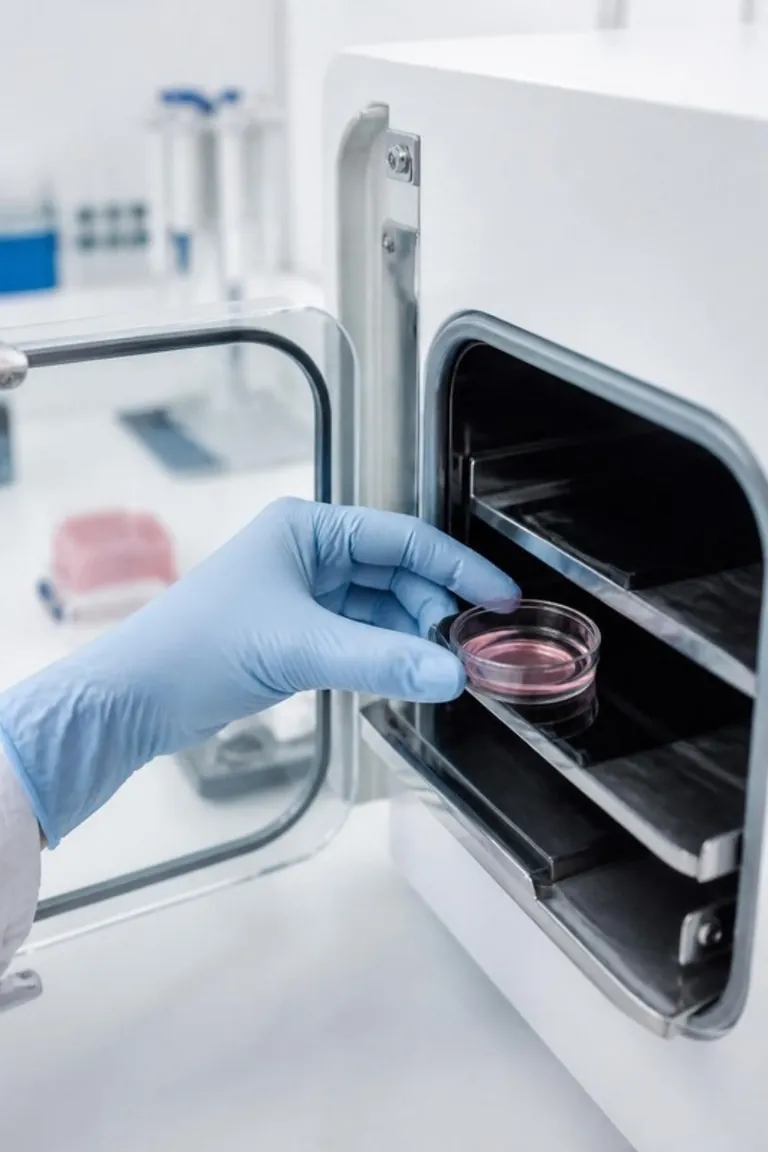
If you have embryos in storage, or your clinic suggests freezing all your embryos and transferring one later, the next step is a frozen embryo transfer (FET). It is simpler and shorter than a full IVF cycle: there is no egg collection, and much of the preparation can happen at home. In the UK, frozen transfers now make up almost half of all IVF cycles. This guide explains who FET suits, how your womb is prepared, what happens on the day in North Cyprus, and what UK figures say about success.
Short answer: In a frozen embryo transfer, an embryo frozen earlier is thawed and placed in your womb at the right point in your cycle. The womb lining is prepared either in your natural cycle with monitoring, or with oestrogen and progesterone medication; NICE says the chance of a live birth is similar with both for women with regular cycles. Much of the preparation, including tests and lining scans, can usually be done in the UK, so the stay in North Cyprus is usually short, although it depends on the clinic and protocol. Costs vary, so get a written quote at a free consultation.
What is a frozen embryo transfer?
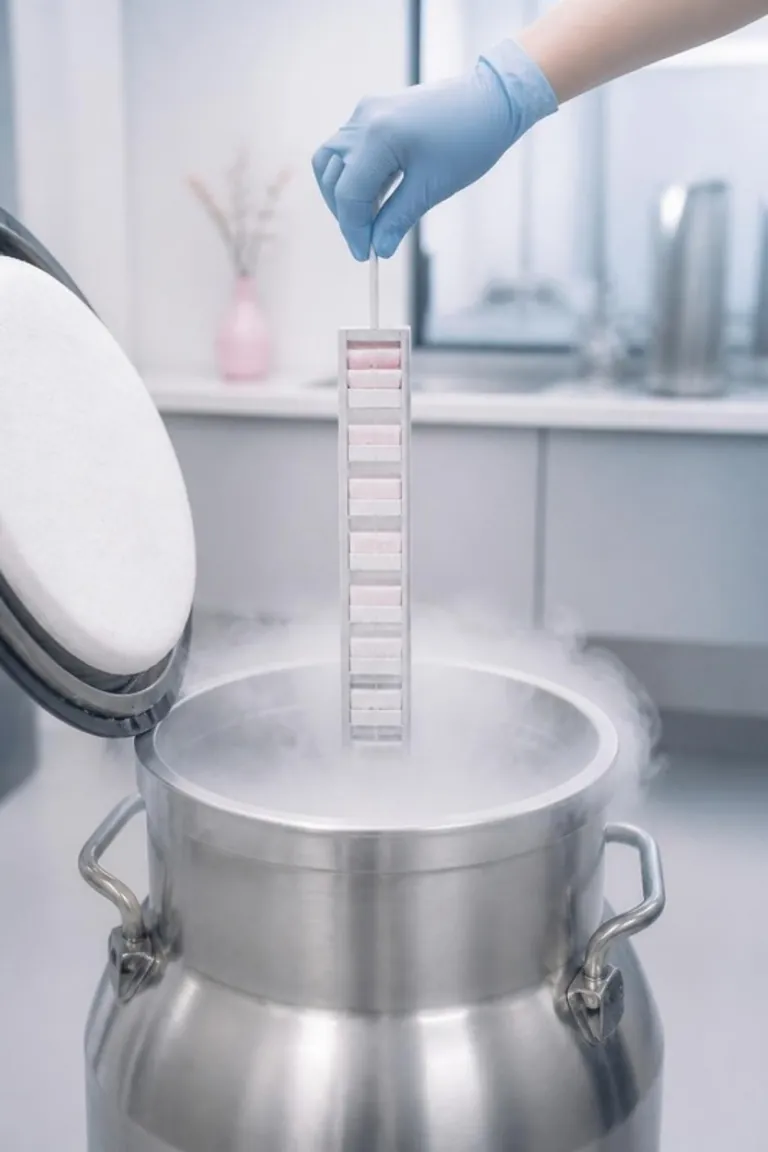
Embryos are frozen by vitrification, a fast-freezing method, and stored in liquid nitrogen. At the right point in your cycle, an embryo is thawed and placed in your womb. According to the HFEA, most embryos survive thawing, although some do not and, very occasionally, none survive. The HFEA considers using frozen embryos just as safe as using fresh ones; the main risk, as with any IVF, is a multiple pregnancy if more than one embryo is transferred.
Who is a frozen embryo transfer for?
- You have embryos from an earlier cycle. Good-quality embryos left after a fresh transfer can be frozen for another attempt, or to try for a sibling.
- You had a "freeze-all" cycle. All embryos may be frozen, for example if you are at risk of ovarian hyperstimulation syndrome (OHSS). The HFEA rates freeze-all green for reducing that risk but amber for the chance of having a baby, and ESHRE advises against it as a routine approach.
- Your embryos were tested with PGT. Biopsied embryos are usually frozen while the results come back, then transferred in a later cycle.
- You are using donor embryos. Donated embryos come from storage, so the treatment is a frozen transfer.
- You froze embryos for the future. A FET is how you use them. See our page on embryo freezing.
Natural or medicated cycle: how is your womb prepared?
The embryo needs to go in when your womb lining is ready. There are two main ways to get there, and your clinic will suggest one based on your cycle and history.
Natural cycle
If your periods are regular, the transfer can be timed to your own ovulation with little or no fertility medication. Ultrasound scans track the lining, and urine or blood tests show when you ovulate. In a "modified" natural cycle, a trigger injection times ovulation more precisely.
Medicated (HRT) cycle
If your periods are irregular or absent, your doctor may suggest hormone medication, sometimes after first suppressing your natural cycle. Oestrogen, as tablets, patches or another form, builds up the lining, usually for around two weeks. Once a scan shows the lining is ready, progesterone is added and the transfer is timed to it. If you become pregnant, the medication usually continues until around 12 weeks; your clinic will tell you when to stop.
Which approach is right for you?
NICE advises that, for women with regular ovulatory cycles, the chance of a live birth after a frozen transfer is similar in natural and hormone-supplemented cycles. A medicated cycle is easier to schedule and is cancelled less often, which helps when booking flights. However, a 2023 research review reports that several studies found a higher risk of pre-eclampsia after fully medicated transfers, possibly because no ovulation takes place, and suggests considering a natural cycle first for women who ovulate. The evidence is mostly observational, so ask your clinic which approach it suggests, and why.
What does the timeline look like?
Every clinic and protocol differs, but a typical frozen transfer from the UK looks like this:
| Step | Where | What happens |
|---|---|---|
| 1. Free consultation | Online | You discuss your history and embryos with a partner clinic, agree a plan and receive a written quote. |
| 2. Tests and records | UK | Required tests are done locally; your embryology records go to the clinic. |
| 3. Cycle starts | Home | Natural: you track your cycle. Medicated: you start oestrogen when the clinic advises. |
| 4. Monitoring scans | Usually UK | Scans of your lining are shared with the clinic, which confirms the transfer date. |
| 5. Progesterone | Home or Cyprus | In a medicated cycle, progesterone starts a set number of days before the transfer. |
| 6. Travel | North Cyprus | You arrive shortly before the transfer date. |
| 7. Thaw and transfer | Clinic | The embryo is thawed shortly before the transfer and placed in your womb. |
| 8. Pregnancy test | Home or UK | You continue your medication and test on the date your clinic gives you. |
| 9. Early scan | UK | If the test is positive, a scan at around 7 weeks of pregnancy checks for a heartbeat. |
What happens on the day of transfer?
First, the embryologist checks that the embryo has survived thawing; the HFEA notes a surviving embryo may lose a cell or two and recover. The transfer itself is short: a thin tube is passed through your vagina into your womb under ultrasound guidance, which NICE recommends because it improves pregnancy rates. The HFEA says you will not usually need any anaesthetic.
Our partner clinics have no fixed policy on how many embryos to transfer: you and your doctor decide together, after discussing the risks. The HFEA recommends single embryo transfer for most patients, because twins and triplets carry serious health risks for mother and babies. If you are offered EmbryoGlue for a frozen transfer, ask about the evidence: ESHRE's review found a benefit after fresh transfers, but not after frozen ones.
There is no need for long bed rest afterwards: NICE advises that resting for more than 20 minutes after transfer does not improve the outcome. Your clinic will give you a date for the pregnancy test. The HFEA advises against testing early, as the result may be wrong.
How long will you need to stay in North Cyprus?
There is no fixed number of days. It depends on the clinic and your protocol, but with no egg collection, a frozen transfer usually means a short stay. Much of the preparation, including tests and lining scans, can usually be done at home; see which tests to do in the UK before IVF in Cyprus. Your clinic will confirm when you need to arrive and when you can travel home.
We recommend Ercan or Larnaca, depending on your situation. Ercan is in the north, so the drive to the clinic is shorter. From Larnaca, in the south, the journey includes a crossing point: our drivers know the procedure, and you will need your passport and ID, plus a visa or a clinic letter if required. If you also plan to visit the south during your stay, check the current GOV.UK travel advice before you book. Dream Transfers offers meet-and-greet airport transfers with 24/7 support.
Is a frozen transfer as successful as a fresh one?
The HFEA's latest UK report gives these birth rates per embryo transferred, using patients' own eggs:
| Age of the patient | Fresh transfer | Frozen transfer |
|---|---|---|
| 18–34 | 35% | 40% |
| 35–37 | 27% | 34% |
| 38–39 | 19% | 29% |
| 40–42 | 10% | 22% |
| 43–44 | 5% | 12% |
| All ages | 25% | 34% |
Source: HFEA, Fertility treatment 2024: trends and figures, Figure 2 underlying data (published June 2026; 2024 figures are preliminary). Excludes treatments using PGT or donor eggs. For frozen transfers, age is the patient's age at egg collection.
Read these figures with care. The HFEA stresses that fresh and frozen rates are not directly comparable, as people having frozen transfers are more likely to have had good-quality embryos suitable for freezing. With frozen embryos, results depend largely on your age when the eggs were collected. These are UK averages, not figures for any clinic in Cyprus.
Can you use embryos frozen at another clinic?
Often, yes, with planning. If your embryos are stored in the UK, the HFEA says a licensed UK clinic offering export services must check that strict conditions are met before they can be moved abroad. If they are not, the clinic can apply to the HFEA for special permission on your behalf; you cannot apply directly. Clinics may charge for this. The receiving clinic in Cyprus must also agree to accept them, so raise this at your free consultation.
If you later want to move embryos frozen in Cyprus to a UK clinic, our team can help coordinate the paperwork with the clinic in Cyprus and communicate with your UK clinic. We do not arrange couriers ourselves.
How much does a frozen embryo transfer cost?
Costs vary with the clinic, the type of cycle and your medication, and storage may be charged separately, so ask what is included. You can get an estimate with our IVF cost calculator, then a written quote at your free consultation. Dream IVF Cyprus patients also receive 10% off all prescribed IVF and pregnancy medication.
Our Cyprus-based team can arrange a free, no-obligation virtual consultation with a recommended partner clinic to review your stored embryos and plan your transfer. Contact us to get started.
Frequently asked questions
Do I need medication for a frozen embryo transfer?
Not always. If your cycle is regular, a natural cycle with little or no medication may be possible. A medicated cycle uses oestrogen and progesterone.
Will my embryos survive thawing?
Most do, according to the HFEA, but not all, and very occasionally none survive. Your clinic will tell you whether a thawed embryo is suitable for transfer.
Does it matter how long my embryos have been frozen?
The HFEA says there is not yet enough evidence to say for sure whether longer storage affects embryos.
Can I have the pregnancy test and early scan in the UK?
Usually, yes. Your clinic gives you a test date; if it is positive, a scan at around 7 weeks of pregnancy checks for a heartbeat. Share the results with your clinic in Cyprus.
Sources
- HFEA — Embryo freezing
- HFEA — Fertility treatment 2024: trends and figures
- HFEA — Fertility treatment 2023: trends and figures
- HFEA — Elective freeze all cycles
- HFEA — Decisions to make about your embryos
- HFEA — In vitro fertilisation (IVF)
- HFEA — Importing and exporting sperm, eggs and embryos
- NICE NG257 — Procedures used during IVF (2026)
- NHS — IVF (in vitro fertilisation)
- ESHRE — Good practice recommendations on add-ons in reproductive medicine (Human Reproduction, 2023)
- Reproductive Biology and Endocrinology — Preparation of the endometrium for frozen embryo transfer: an update on clinical practices (2023)
Last updated: 13 November 2026
Have questions about your own fertility journey?
Talk to our Cyprus-based Dream Team. We’ll explore your options together and arrange a free consultation with a recommended IVF clinic — no hidden fees.
Have recent results (AMH, FSH, ultrasound)? A partner clinic specialist will review them for free.